
The first time I heard about the Information Kiosks scheme in villages many years ago, it caught my attention for two reasons. Reason 1: The scheme was launched in a village in Pondicherry, not far from our village where my family hails from. Reason 2: Dr.M.S.Swaminathan. Yup, the genius behind the scheme. Ever since that eventful meeting I had with him at his office, I have had deep admiration for him and his vision.
What the Information Kiosks did was to help provide information like the existing crop prices and remedies for crop diseases. The experiment created a lot of interest. For many of the villagers, it was their first exposure to Internet and technology, even if it meant on pitifully slow dial-up connections.
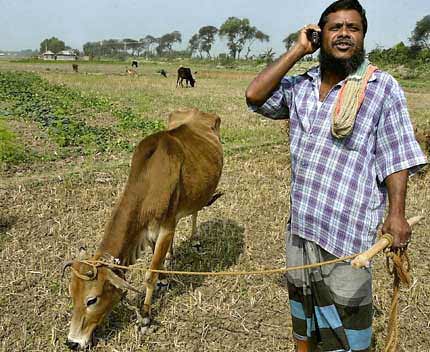
Yesterday, when I heard about Nokia’s Life Tools scheme, it reminded me again of Dr.Swaminathan’s Digital Kiosks scheme. The difference is that instead of a PC, its happening on a mobile device. Instead of everyone coming to a room in a village to access, its now available in your palm. More importantly on entry level, inexpensive mobile phones. Now, farmers can get customized information on crop prices, fertilizers and pesticides based on the farmer’s location and his choice of crop.
I personally witnessed how rural folks cleverly use mobile. And almost invariably, it has to do with maximizing their income. During December 2004, as part of the Tsunami relief work, me and a bunch of friends traveled to MGR Thittu near Chidambaram in Tamilnadu. We noticed that the fishermen would venture out into the ocean and before they returned back with their overnight catch, they would call from their mobile phones and find out which markets have more demand and thus willing to pay the highest for their catch. They would accordingly steer their boats to that place. Simple phone calls helped them get better returns. The lesson is that folks will embrace technology if they see a direct monetary benefit.
Will Nokia Life Tools be a success? Yes, if it can help directly benefit like how the fishermen got benefited. While passive benefits like learning English better are good, it ultimately boils down to how can it help get better income. If that happens, the acceptance would be swift. Think of how the lassi wallahs in Chandigarh helped boost washing machine sales.
Any new initiative will take time to be accepted and it needs to be educated, especially when it comes to rural audience. That’s the mantle that Nokia seems to have taken.
One thing I have to agree outright is that the best way for technology to reach out to rural India will not be through PCs. It *has* to be through mobile phones. The amount of massive usuage of mobile phones in villages is staggering. I only have to look at my own village to see this. From that angle, there’s no doubting the reasoning and the strategies behind the Nokia Life Tools. This project is right now in a pilot stage and is expected to roll out during first half of 2009.
